It’s a very cold day today, so I am going to skip the chronological order of my travels and jump to warmer climes!
Around mid-May I was done with northern Europe (the little I saw). Yes lovely it was, but also cold, and rainy. Just like my hometown. And I was starving for the sun, like the strange creature of summer that I am. Even in India, my favourite weather will always be the warm, soft and heavy air of the western coastline of India.
So anyway, there I was in Germany, loving Berlin, but also dying to get to Greece. Europe deserves atleast a month, and Greece? well frankly I hope I can do Greece again in my uncertain life. Maybe I could just die in Greece? Such a beautiful, ancient country.
My first evening was mostly me walking around Athens looking for my friend’s apartment. The next day, the lovely Acropolis…which was happily for me, quite close to her place.
W\hat can I say about the city on the hill that others have not said better? Well for one, I wish I had finished reading the book that I am reading currently “The Marriage of Cadmus & Harmony“, because that would have made me look at everything with an even livelier curiosity. Not to say that I haven’t always been fascinated by the ancient Greeks. Call it the vestiges of a euro-centred English education that I was exposed to when growing up, or the cultural hegemony of the west (!), but I found Greece fascinating.
Or maybe it’s the fascination that I have always had with the dead and decayed, the remnants of human civilisations and the incongruous outcroppings of the past in the middle of our lives. Athens is like Delhi in that sense, the past lives next door to the present. The Greeks are not as fastiduous and perfectionist about the past (yes, like us), and so there is a past all around the present, crumbling but still gloriously and incomparably beautiful.
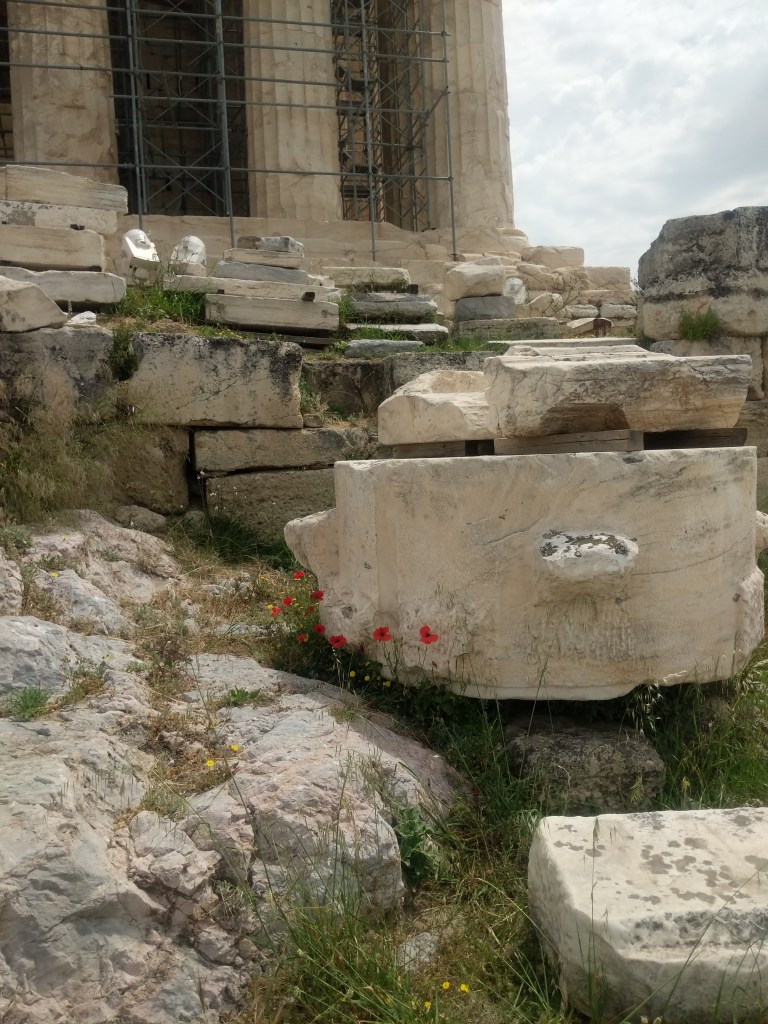
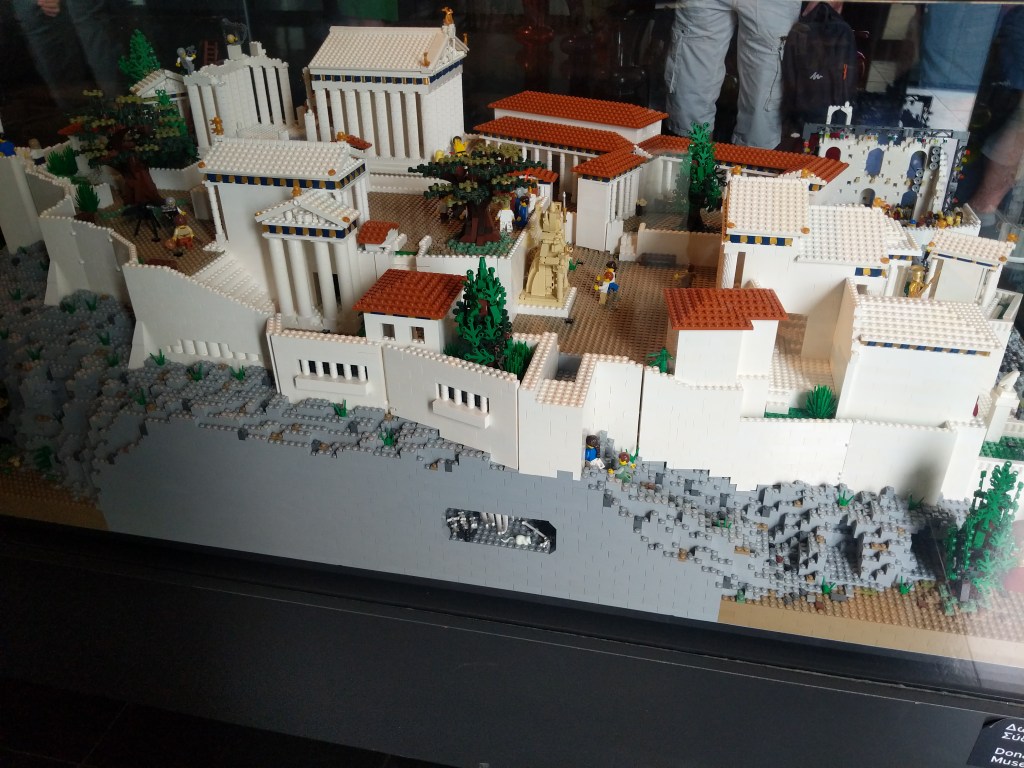
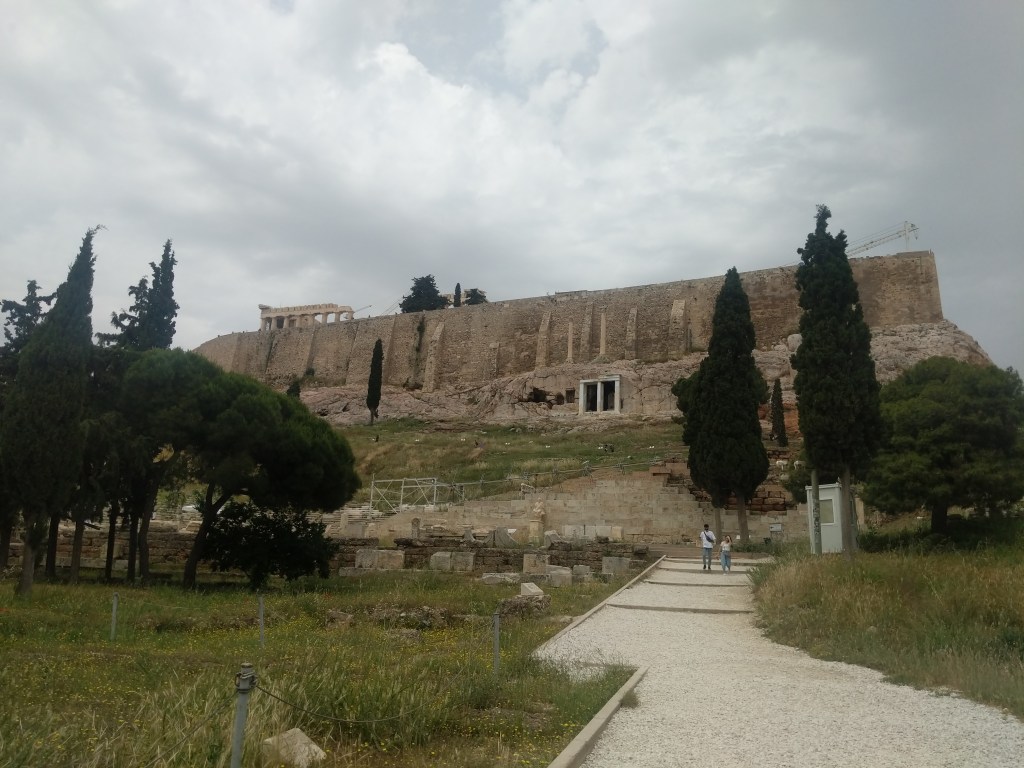
As I was walking up the gentle slope I was happy, happy with the sun shining and the brightness of the day. Happy that the crowds were still lighter than I expected, and keen to explore the quaint streets below the Acropolis. The city sprawls all around the ancient hill (or is it a mesa?) and I was wondering…did the ancient Athenians live only around the hill? Or were they also sprawled across these lands which would have been more verdant then?
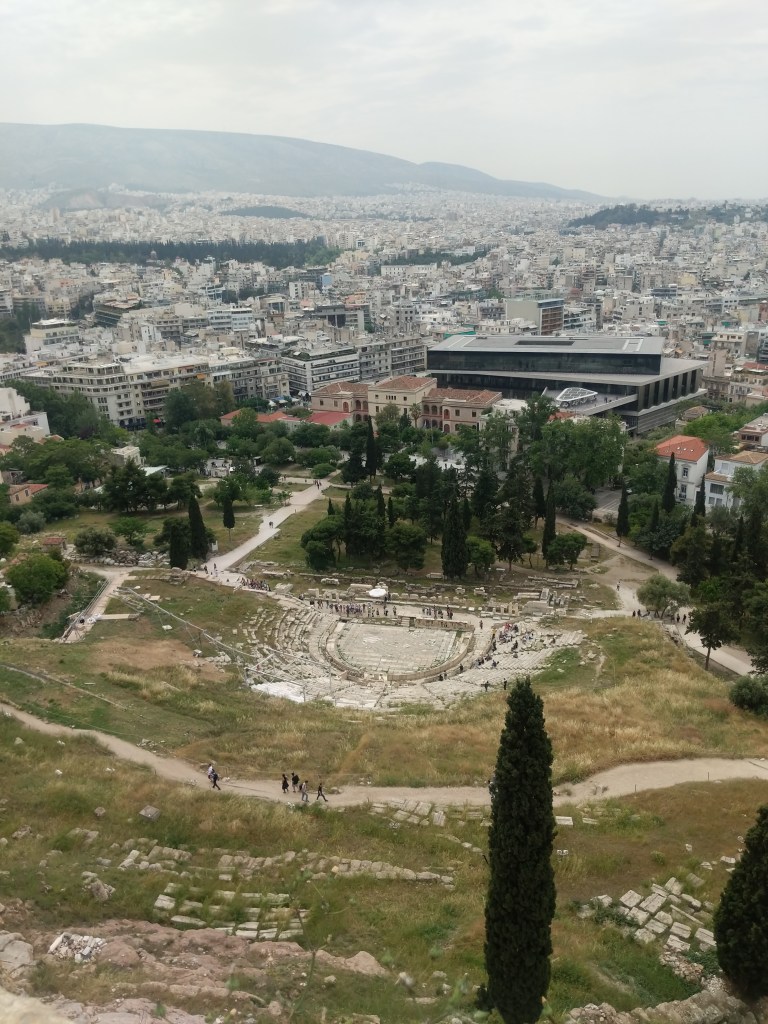
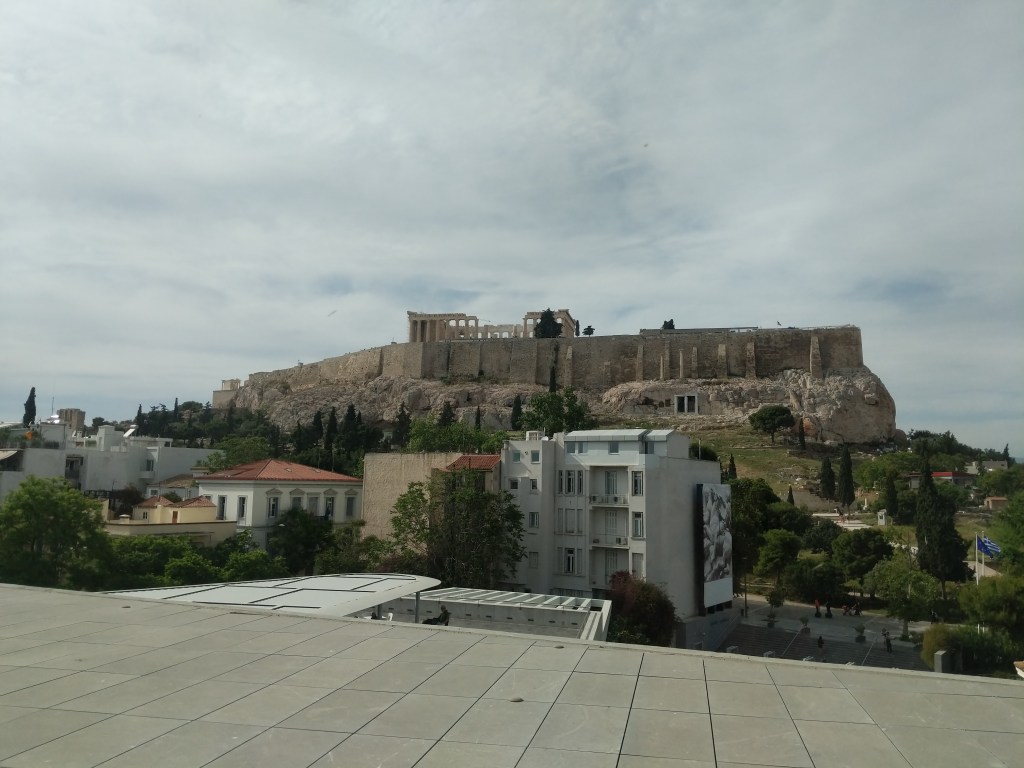
I stopped all along the way, listening to a very handy guide from Rick Steves, the audio guide that is heaven-sent for travellers like me. It was getting warm up there on the hill, the groups of senior citizen tourists were getting visibly tired, but I walked all around the Parthenon, with Rick cheerily chirping into my ears.
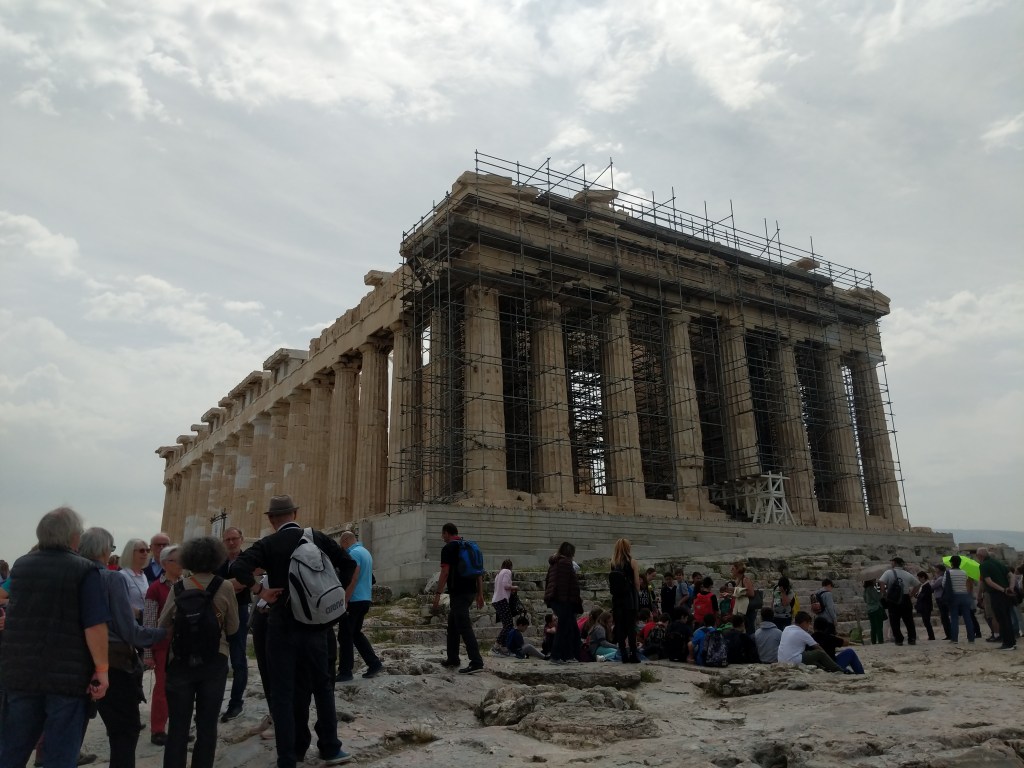
[An aside: I think it was after the Greek tour that I also started noticing how heavily influenced by these ancient columns the American Capitol Hill is. But then it’s always interesting to see how influential the Greek civilisation and architecture has been]
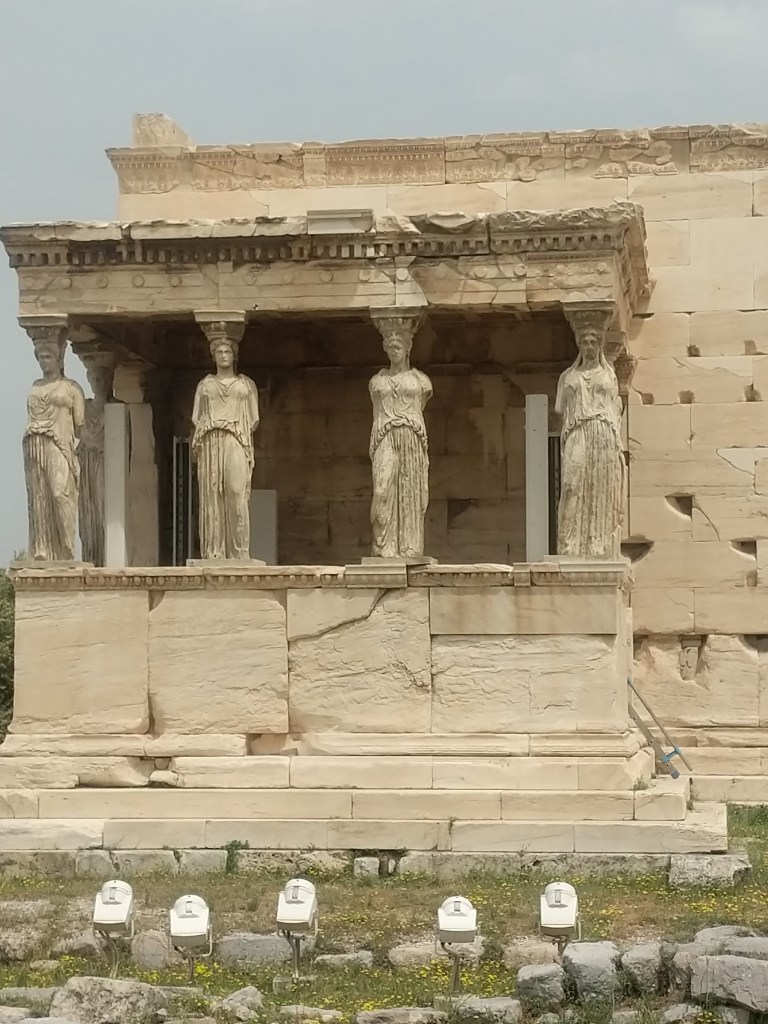
>> The silent women looking down at the world for centuries. The original caryatids are in the museum, liquid and wavy like their thick plaits of hair. As Roberto Calasso is fond of pointing out in his book “Once you have a double on the scene, it’s like entering a hall of mirrors; everything is elusive, stretching away into a perspective where nothing is ever final.” <<
Athens of course was named after/by the goddess Athena, and the founding stories are incredibly interesting. Again Calasso (should have read the book before Greece!) in his book has an entire chapter to this, including the myth of the serpent guardian etc, but I will leave that for you to explore.
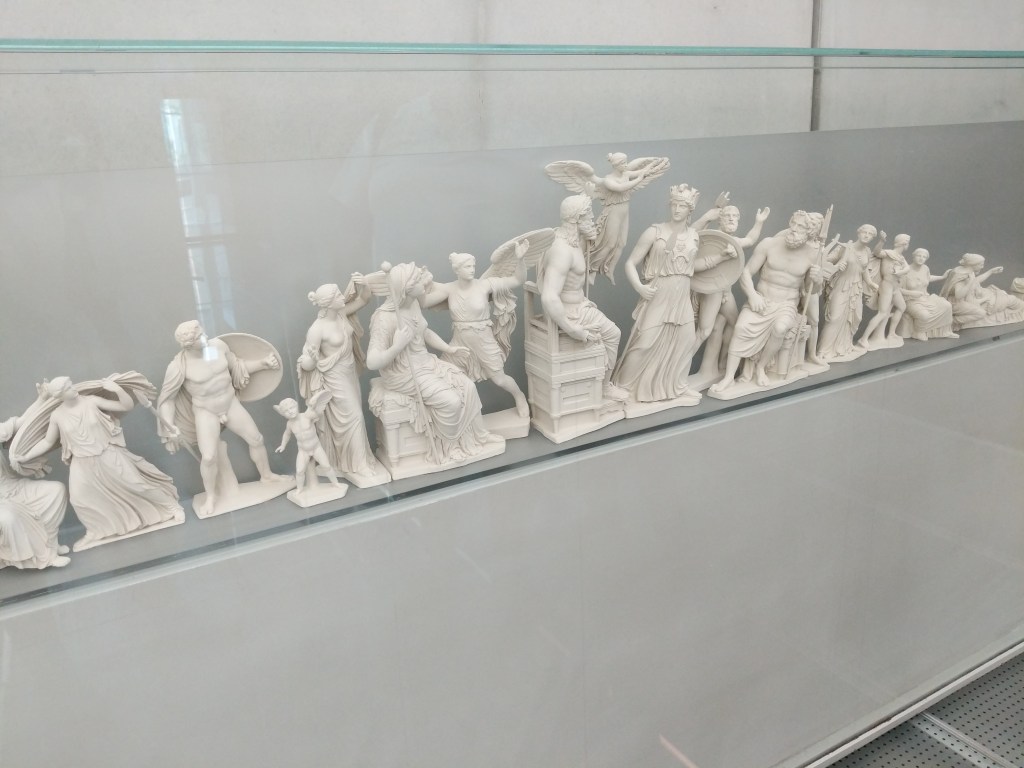
What has always fascinated more, is how a story becomes a ritual after many years and centuries without anyone remembering why they do the things they do.
In this context, Calasso talks about the ritual of young Athenian girls who had to carry a box of unknown things down the hill, leave the bundle at the bottom, pick up another and come back up. Both times in the dark, and both times without stopping to see what they were carrying.
In effect they were replaying the story of the time when some young girls opened a bundle that Athena had charged them never to open. In the process, they prevented the immortalisation of Athena’s “adopted” son, the half human-half snake Erichthonius. As they say, never open what you should not little one, or face the wrath of the goddess.
 My Little Travel Diary