If I continue to post on Europe I will never get to other beautiful places, so here is a post on Darjeeling. This is a town where I grew up in, and its quietly beautiful and crumbling colonial architecture has always reminded me of the fall of hubris.
The town was built in the mid-nineteenth century by the British as a sanatorium for invalid soldiers. The first 100 years of its existence were its halcyon days. Planter’s clubs for the tea-garden managers, the mall-road, bookstores, colleges, churches, railway stations(!), bakeries, water reservoirs that brought piped water into cosy bungalows with gardens of rhododendrons, chrysanthemums ….you get the idea.
Everything about Darjeeling was privilege, with the colonials living on hill tops and the “natives” down below the chawk in early industrial era housing colonies- Butcher-basti, Ghadi-khan, Gurung-basti, Balwa-khana.
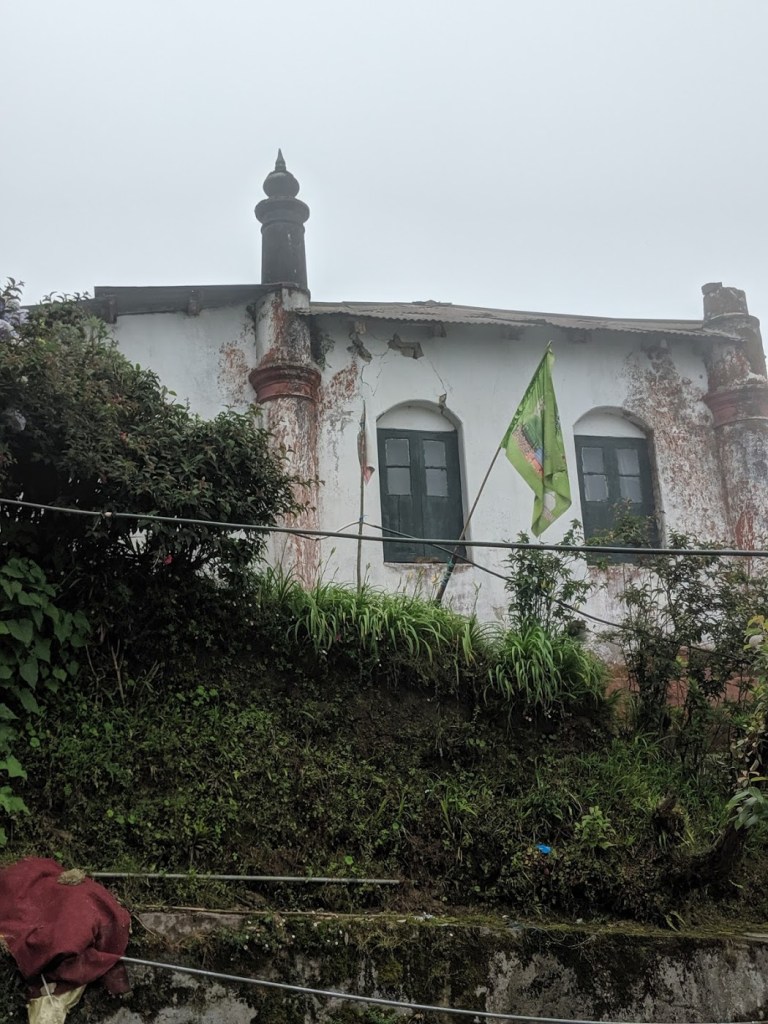
Fast forward another hundred and seventy years, the town is crumbling under massive population migrations, commercial exploitation through the tourism industry and yet..oh my god, and yet some old vestiges still shine through.
.
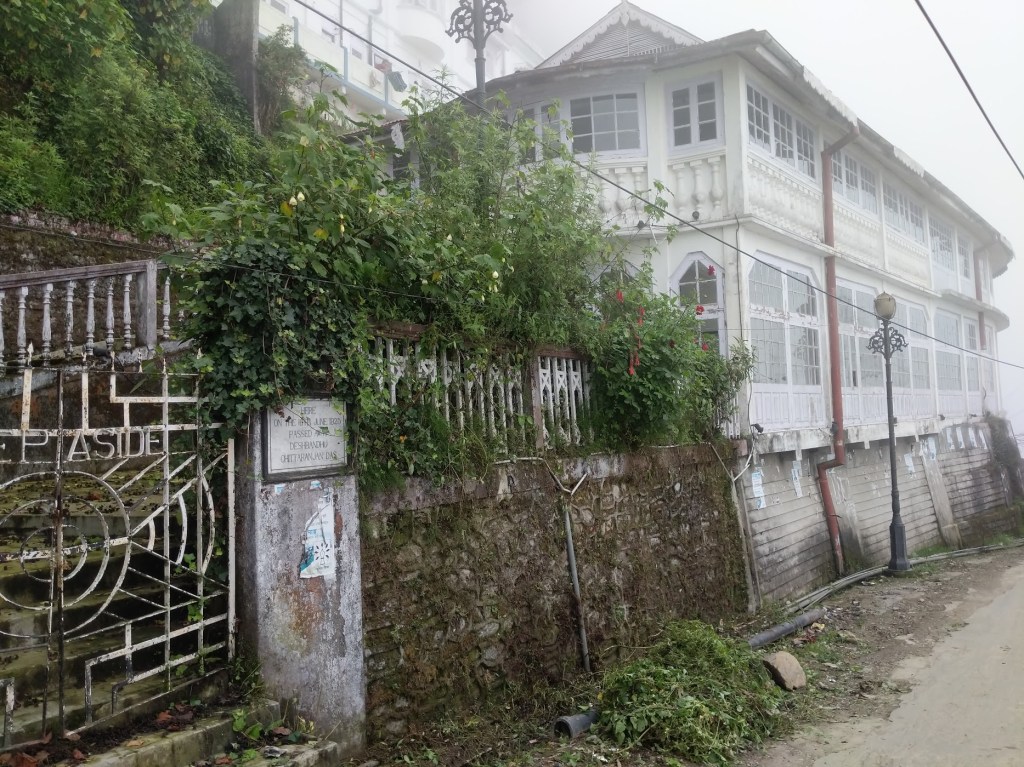
In many ways, Darjeeling is like Old Delhi, or parts of South Mumbai or Kolkata, Chennai, Mysore..everywhere where you see crumbling ruins of past glory taken over by incessant ant-like humanity. Anywhere else in the world these little nooks and corners would be cherished as part of a historical legacy, but in India everything gets tossed out. Out with the old, in with the new. I especially think its also because typically with a regime-change, the original urbanised population gets massively dislocated, or lose power. A new people, themselves dislocated from rural areas because of systemic failure, move in. This is a new people, we do not care about who was here before. It’s a daily rise and fall of the Roman Empire in the streets of old Indian cities and towns. And so it goes until everything is dust.
That fascinates me, this impermanence of things. Of beauty, grandeur. In a way, this is the east’s way of saying- nothing that man builds will last.
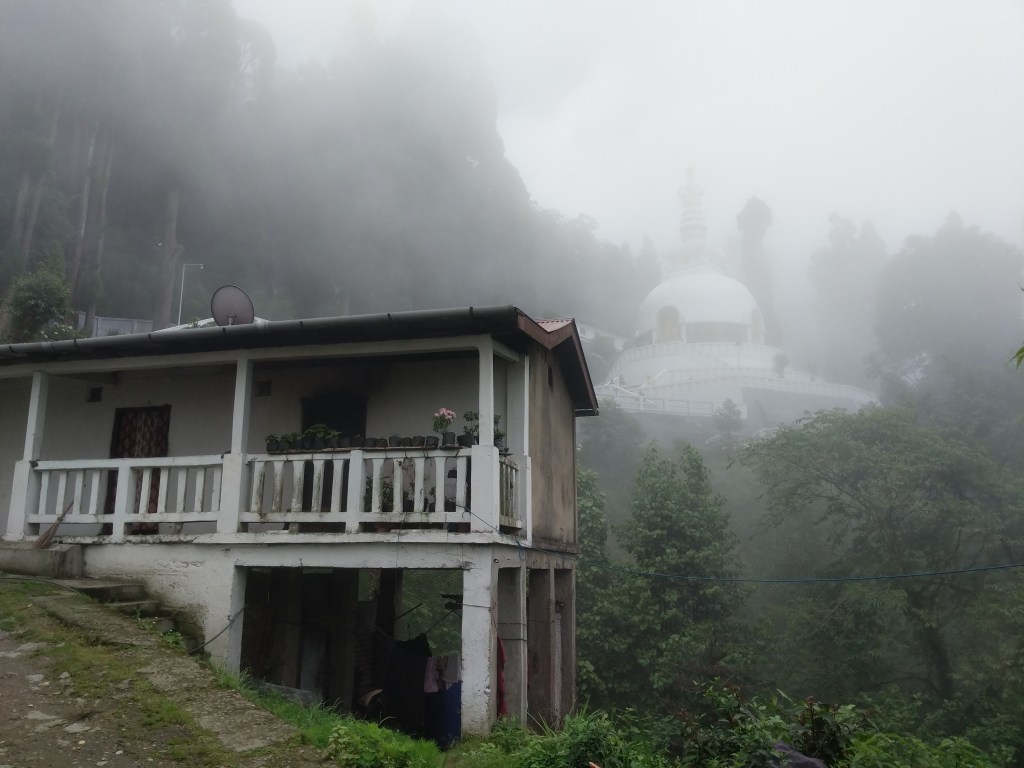
Hopefully what will last will be the mist. or will it? I cannot say. That is why I am taking pictures to capture the mist and the greenery. This is how beautiful it is even now. Like an old old impoverished courtesan. So that you can imagine how gloriously beautiful she was in her youth.

 My Little Travel Diary