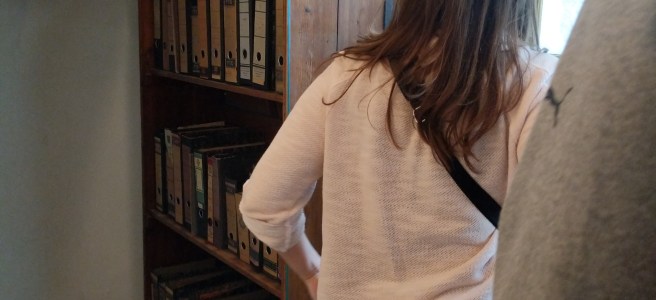
Although I spent far too little time in Amsterdam, there was one place that I meant to visit and I did- Anne Frank’s secret annexe. Anne Frank needs little introduction here, her diary has been one of those treasured introductions into a past that we must never forget. I am ever grateful to my mother for getting me this book from the library, probably when I used to be sick a lot and sat in bed reading all day.
We need every little girl (and boy) to read her diary. To understand why a precocious girl who could write so well, never grew up to be an adult. That was why I wanted to visit the last place where Anne had a semblance of normal life.
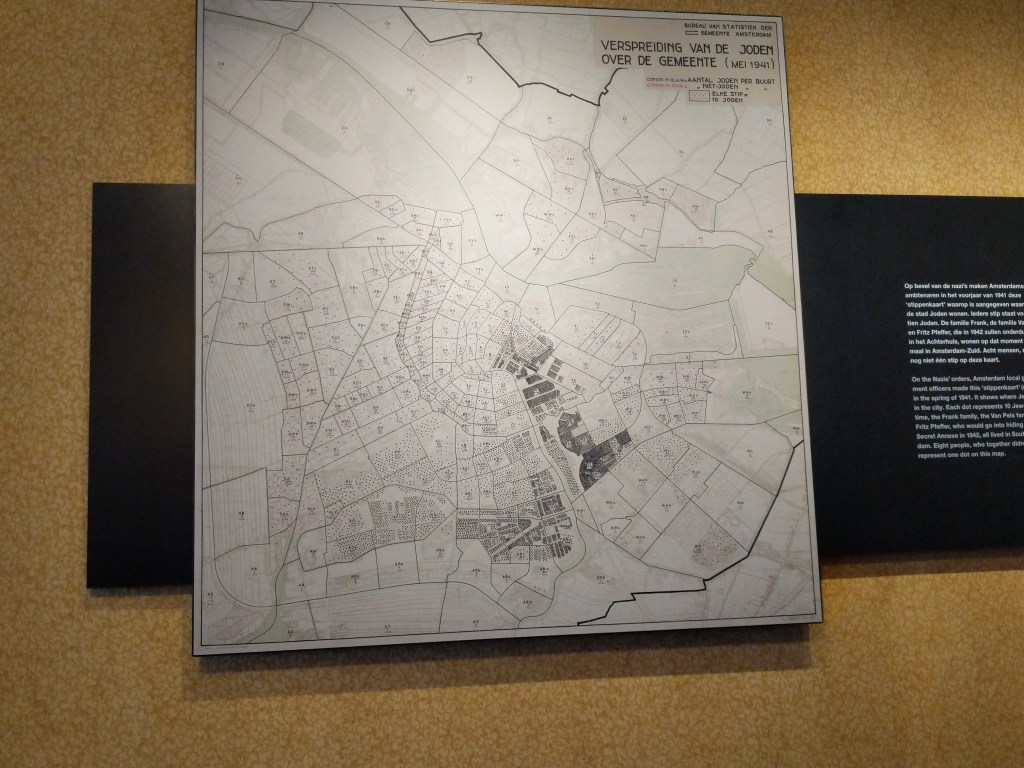
Photographs help me in reconstructing my travels, but I do remember the intense guilt I felt at taking pictures inside the house. Photography is forbidden, and I did not want to be that ugly tourist. At the same time, how would I remember later? So I sneaked a few shots in the beginning, but as we got into the living spaces of the Frank family I simply couldn’t. It just didn’t feel right. So these are the only photographs I took.

I had planned the house tour after the canal ride, suspecting it would be a bit heavy on the emotions. Most of touristy Amsterdam is well within walking distance, and the city is such a pleasure to walk through. As I approached the house from the other side of the canal, I saw a line of people waiting, perhaps for the same 4 ‘o’ clock schedule that I had. When it was time, we were all ushered in, first through a modern looking space and then we started walking up narrow and rather steep wooden stairs. Stairs that reminded me of old houses in Darjeeling.
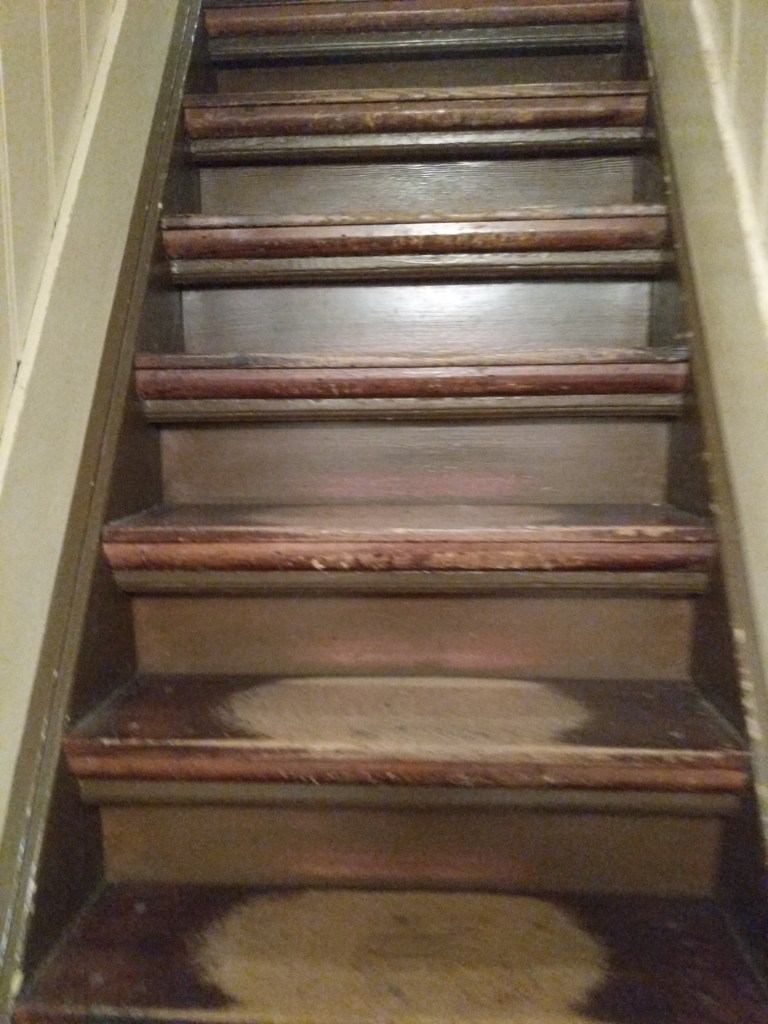
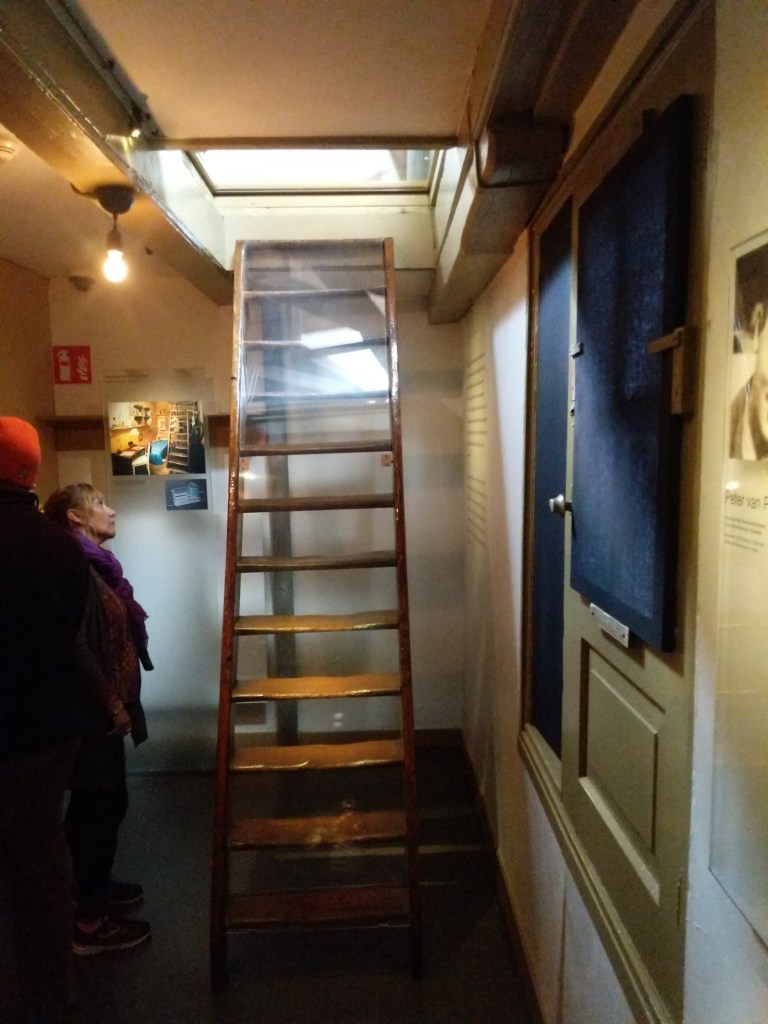
The museum has preserved the entire section of what used to be the the annexe of the office building/ warehouses. This was the section that stayed hidden until the families inside were betrayed. As we climbed, the audio guides were helpful in giving rich details of each section. {An aside: western museums have perfected audio guides, there have been many that I was glad to have invested in.}
These narrow rooms piled vertically were the tiny spaces where some Jew families lived in hiding during the war. The architecture of Europe in the 1940s is almost more familiar to someone who comes from crumbling colonial towns like Darjeeling. I could imagine Anne’s family using the black protruding electric switches or washing dishes under grinding taps of water at the sink; even the naked light-bulbs throws a glow that I am familiar with. Suddenly her world was not so distant. Time and distance had collapsed only to reveal me and legions of tourists shuffling in spaces where all traces of the original people who lived here was gone.
The misery of the Jews, and Europe’s preservation of this dark chapter in their history is absolutely unique. It is not as if there has not been genocide in other parts of the world, some have indeed been extremely cruel and brutish. There have been unrecorded eradication of people to such an extent that nothing remains of their language or culture except an artifact here or there. Sometimes mute ruins hint at a lost glory. I bring to mind entire continents of people that have been subdued, their elders silenced and their young fostered in new cultures, whose descendants become the lowest pecking order of the invaders’ society. In some instances, there have even been protracted exploitation of the weak., not an annihilation but a continuous grinding of existence.
Yet, almost nowhere have I seen an effort to preserve the past, to keep reminding others what was here once, except in Europe. An effort to atleast try and learn from what went before.
Those who cannot remember the past are condemned to repeat it.
George Santayana
Tip: Book your tour of the Anne Frank Haus in advance here.

 My Little Travel Diary